












DaVita, one of the world’s largest kidney care providers, operates across diverse healthcare systems, regulatory landscapes, and clinical environments. With the organisation’s expansion, DaVita chose a data normalisation strategy grounded in openEHR and powered by Better’s vendor-neutral Clinical Data Repository. This approach enables the organisation to get high-value clinical data from existing EMRs, standardise it, and use it to deliver richer analytics, stronger governance, and more consistent quality across all countries.
We spoke with Partha Das, International Chief Medical Officer at DaVita, about why the openEHR model was the pragmatic solution, how the unified data layer is already transforming quality and decision-making, and what Phase 2 of their programme means for the future of data-driven kidney care around the world.
DaVita is one of the world’s leading kidney care providers, operating in multiple countries and systems. What motivated you to embark on this data normalisation journey, and why was the openEHR approach the right choice for achieving it?
Our main mode of growth has been to acquire other providers of kidney care, which means that we run a number of different EMRs across our global portfolio. It makes sense to keep these systems running for several reasons, including frontline teammate satisfaction, compliance with country-specific healthcare regulations, data privacy laws, and the cost of change.
However, running disparate systems brings up challenges for governance and data analytics, largely because individual EMR databases vary in terms of what data can be interrogated/extracted. Initially, we looked at running a single EMR system across all countries, but this approach did not feel like it would work from a pragmatic point of view.
We then came across openEHR as a standard to normalise our clinical data. The concept of harvesting data from our existing systems, immortalising them in vendor-independent CDRs, and placing applications or analytics on top of the CDRs, felt like the most pragmatic step to leveraging our internal data without disrupting clinical workflows.
The collaboration with Better introduces a vendor-neutral Clinical Data Repository across DaVita International. How does this unified data platform improve care quality, efficiency, and clinical decision-making across your network?
Firstly, the move to CDRs has made us review all of our data governance processes and concentrate on strengthening our data fidelity as well as improving our internal capabilities in working with data. We now have a team of data scientists working across our countries, which has been a big boost.

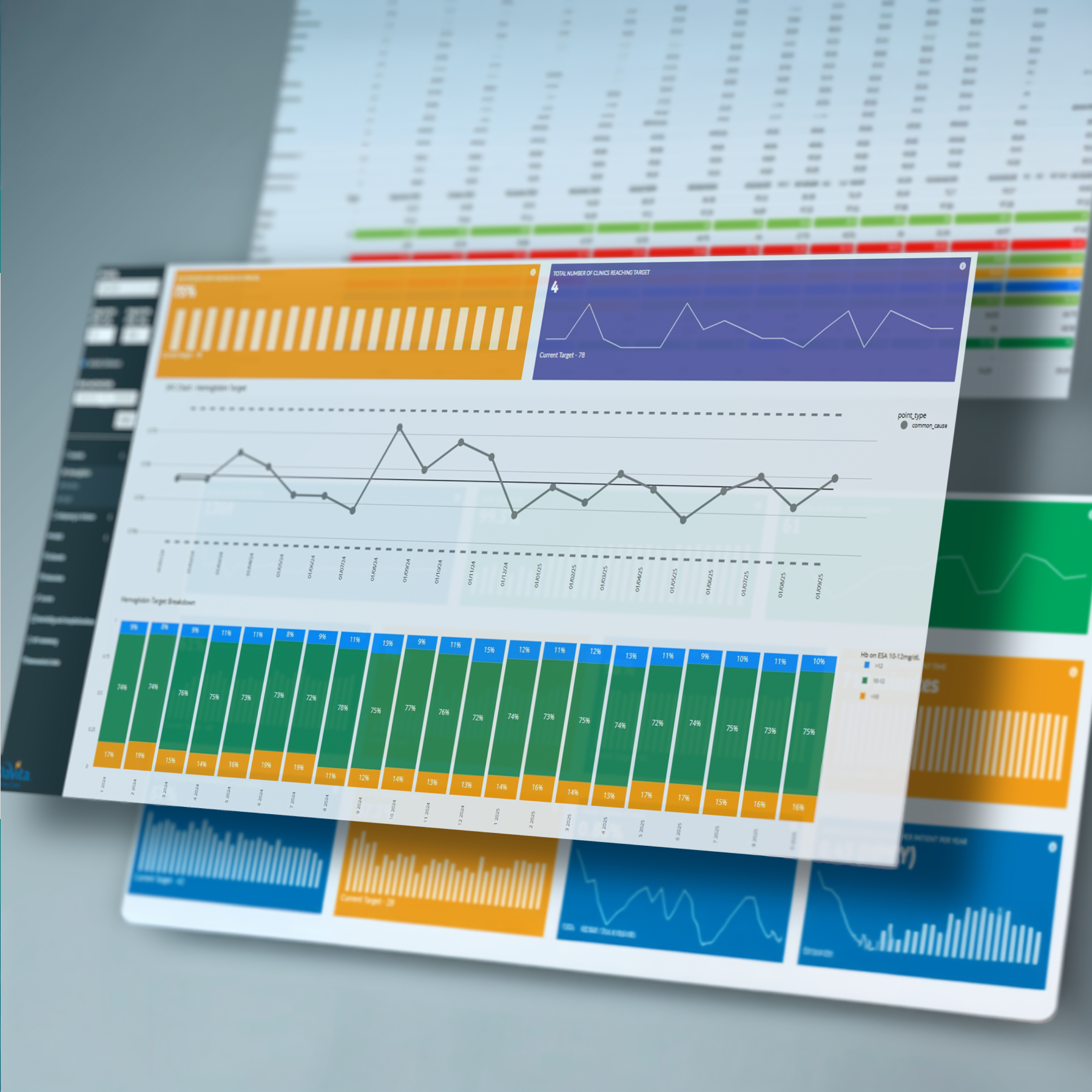
We are now able to get insights much more quickly than we did previously, which is vital for guaranteeing quality across our countries, and we can free our clinical management teams from spending time working with multiple spreadsheets. For me, the visibility of where we are doing well and where we have opportunities has been incredible. It has meant that we can now speak to the people we have the privilege to care for with confidence about the quality and experience of care they will receive. It is also important when we speak to external partners and policymakers.
We want to guarantee that people living with kidney disease are better off in our care than with any other provider and the data that the CDR is allowing us to work with demonstrates this point again and again.
You are now entering Phase 2, aiming to double the number of processed data points and increase the update frequency. What new opportunities or insights do you expect to gain from this expanded dataset?
Our internal quality framework is called Interstellar. It measures the quality of our care across four domains: patient safety, nursing practices, traditional medical outcomes (like mortality), and patient experience. The Phase 2 project will allow us to coordinate Interstellar more efficiently, as well as augment the framework to drive standards higher, in line with one of our company’s core values of continuous improvement.
Furthermore, as well as showing through the data the quality that we can bring to patient care, in Phase 2, we will also have the fundamentals for one of the largest multicountry research databases for dialysis patients. Leveraging this can help us ask more detailed questions to help drive care better and also to give insights back to the wider nephrology community.
You mentioned that DaVita will soon read data exclusively from the CDR for the first time and that it is an important step for the organisation. How do you see this shift transforming the way your teams use data to guide care?
Firstly, this means making a number of older legacy data processes redundant (which will alleviate some headaches for our data science teams), and secondly, as a result, we should see our data fidelity improving significantly. The beauty of the CDRs is that they remain within our countries, so no patient data (even anonymised/encrypted) moves across national borders. Finally, having all countries on our openEHR CDR, will mean we can much more easily develop and test advanced tools such as machine learning based risk prediction models. We also hope to start using some of the Better Studio functionalities to visualise information in a compelling way for our frontline clinical teammates.
Looking ahead, what are your long-term goals for data-driven kidney care, and how do you see your collaboration with Better evolving to support DaVita’s global mission?
Better has been a great partner for us over the years. We want to start expanding the data we hold in our CDRs, both in terms of volume and depth, so that we can further generate insights to improve our care in a manner that maintains data privacy and confidentiality.
Ultimately, once we are through these development stages, our goal is to bring the data full circle and back to the people we care for in our clinics. We want them to be able to leverage their data in the way that we have been able to, so they can guide us on how we can serve them better through more holistic and personalised care.
Read more industry insights for 2026 in our yearly publication: