













Point-of-care testing (POCT) is evolving beyond mere speed; its value now lies in how test data integrates into broader healthcare systems. As diagnostics decentralise, the focus is shifting toward ensuring results are reliably linked to patient records.
While AI and modern sensors generate vast amounts of data, this information is only useful if it is interoperable. Driven by initiatives like the European Health Data Space, the future of diagnostics depends on making results not just fast, but traceable and usable across the entire digital health ecosystem.
The data challenge in point-of-care testing
Point-of-care testing (POCT) exists for one reason: delivering diagnostic results quickly, close to the patient, where they can immediately influence care. What started with simple bedside glucose testing has expanded into a wide range of near-patient diagnostics used in wards, emergency departments, outpatient clinics, and community settings.
As testing becomes more decentralised, a problem emerges. Results can easily become fragmented – stored on devices, printed on paper, manually entered into systems, or trapped in software that cannot communicate with the wider clinical record. Governance frameworks increasingly recognise that POCT must be managed as part of a connected system rather than a collection of standalone tests.
Interoperability closes this gap. When POCT data flows directly into digital workflows, results become not only fast but also traceable and clinically useful – linked to the right patient, device, operator, and time. This reduces transcription errors, avoids duplicate testing, and saves valuable clinical time.
The growing importance of connected diagnostic data
Today the conversation around point-of-care testing is no longer only about speed. Increasingly, the focus is shifting towards connected diagnostics. New generations of connected biosensors and AI-enabled devices are emerging (1, 2), but their true value depends on how well the data they produce fits into existing care pathways and longitudinal patient records (3).
Policy developments are reinforcing this direction. The European Health Data Space (EHDS) Regulation aims to establish a common framework for sharing electronic health data across the EU, with laboratory results identified as one of the priority data categories (4, 5). At the same time, national initiatives are encouraging health systems to exchange laboratory data in more standardised and computable ways (6).
As artificial intelligence becomes more embedded in diagnostics, the need for reliable and traceable data becomes even more important. Regulatory developments, including the EU AI Act, are placing greater emphasis on how clinical data is captured, governed, and reused across healthcare systems. Together, these changes are pushing healthcare towards a future where diagnostic data is not only produced quickly, but also structured, shareable, and usable across the wider digital health ecosystem.
What “good interoperability” looks like in practice
In healthcare, interoperability is often described as a technical concept, but in practice it means that diagnostic data can move safely and reliably through the clinical environment. Results must be linked to the correct patient and clinical encounter, so they become part of the longitudinal health record rather than remaining isolated in separate systems or reports.
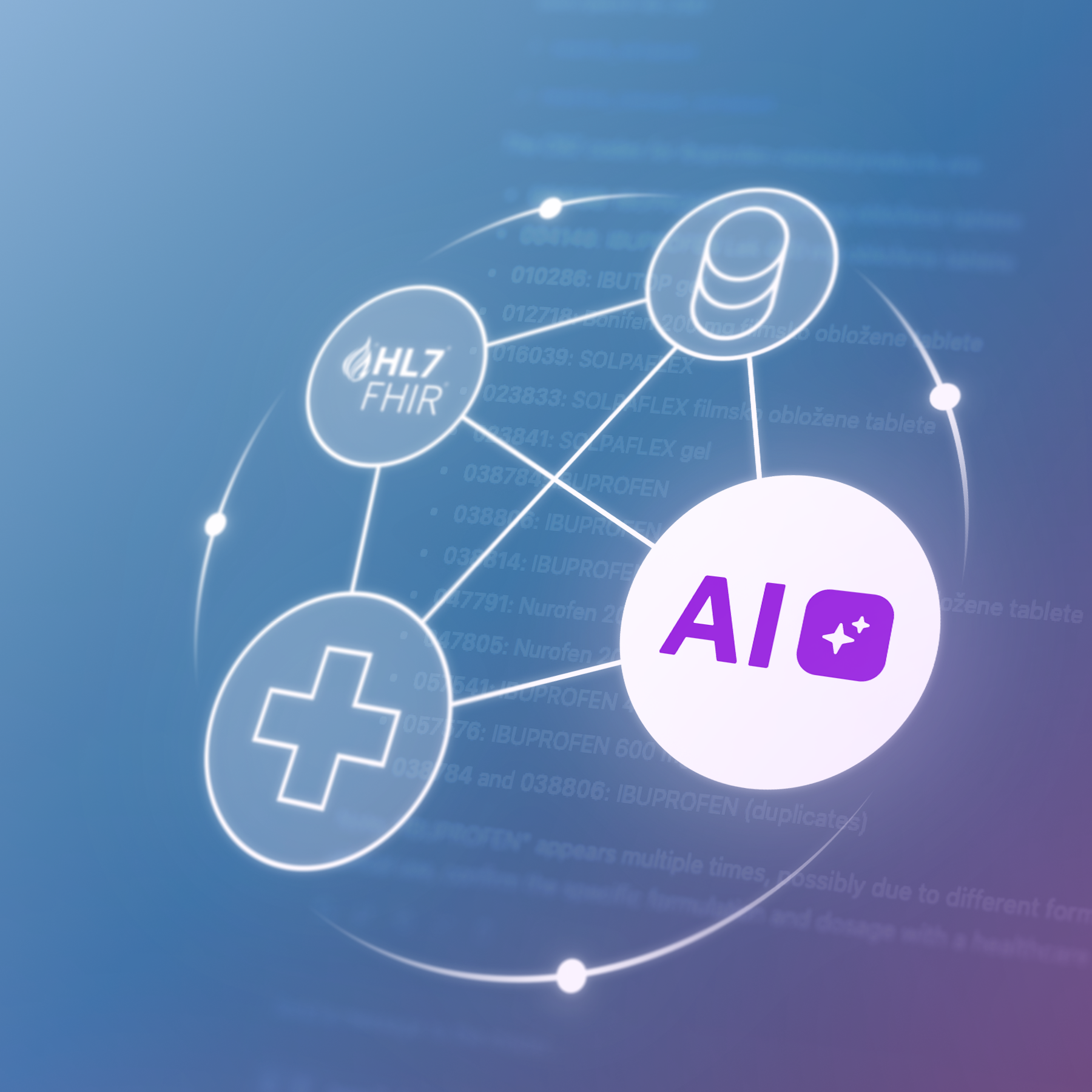
Standards play a central role in making this possible. Data exchange standards such as HL7 FHIR enable systems to share information, while clinical terminologies such as LOINC and SNOMED CT ensure that laboratory and diagnostic results carry consistent clinical meaning.
When diagnostic data enters electronic health records in a structured way, clinicians can interpret results in the correct clinical context. This helps reduce risks associated with manual transcription, delayed data entry, or results recorded without sufficient context. At the same time, structured data reduces duplicate testing and saves time for clinical teams.
As diagnostic data becomes more connected and reusable, governance and cybersecurity also become essential. Reliable access control, audit trails, and secure integration help ensure that clinical information remains trustworthy and traceable across healthcare systems.
How Better supports interoperability
Interoperability is often discussed in terms of standards and technologies, but in practice clinicians experience it through the information available to them. What really matters is whether the right data appears in the right place at the right time.
Better approaches this through structured, vendor-neutral clinical data. The Better Platform uses openEHR archetypes and templates to support semantic interoperability and longitudinal patient records, while enabling integration through openEHR APIs, HL7 v2, and FHIR.
At the application level, Better Studio allows teams to capture structured clinical data in a reliable way through low-code forms and built-in logic, helping ensure that data is recorded consistently and can be reused across systems.
Better Marketplace builds on this by offering reusable clinical building blocks such as forms, templates, widgets, and bundles. Instead of creating the same components repeatedly, teams can reuse these assets and incorporate them into their digital solutions.
Better Marketplace: New tools for urinalysis and renal decision‑making

Kidney and fluid management illustrates why interoperable point-of-care data must go beyond a single laboratory value. Renal care often requires rapid interpretation, dosing-related calculations, and structured follow-up through orders, samples, and documentation.
The Nephrology toolkit bundle brings these everyday clinical tasks into a reusable digital workflow, with a strong focus on urinalysis and urine diagnostics. It includes structured tools for capturing urinalysis data and submitting urine sample requests, helping ensure that samples and results are documented consistently and linked to the patient record.
Alongside these urinalysis components, the bundle also includes commonly used renal tools such as bicarbonate deficit, creatinine clearance, drug dosing support calculations, maintenance fluids based on the Holliday–Segar approach, and serum osmolality or osmolarity. Together, these tools support both laboratory interpretation and clinical decision-making in kidney and fluid management.
As the bundle continues to grow, the aim is not simply to add more tools, but to support creation of connected renal care workflows where information is captured once, structured properly, and reused wherever the patient is seen.
From test results to connected care
As POCT moves deeper into decentralized care, the priority is shifting and it’s no longer just about running the test, but about whether the results are traceable and shareable. Today, interoperability is essential safety infrastructure.
Better Marketplace supports this by providing reusable, open-standard tools that integrate directly into clinical workflows. Our goal is to ensure diagnostic data moves with the patient, turning isolated results into structured, actionable insights across every care setting.
The Nephrology toolkit bundle is one example of how these reusable components can support connected diagnostic workflows, from urinalysis and renal calculations to structured clinical documentation.
To explore the Nephrology toolkit bundle and other clinical tools available visit our Better Marketplace below.
Sources
- Kovur, P., et al. (2025). POC Sensor Systems and Artificial Intelligence—Where We Are and Where We Are Headed. Available at: https://pmc.ncbi.nlm.nih.gov/articles/PMC12467669/
- Subburaj, S., Liu, C., & Xu, T. (2025). Emerging trends in AI-integrated optical biosensors for point-of-care diagnostics: current status and future prospects. Chemical Communications, 61. Available at: https://pubs.rsc.org/en/content/articlelanding/2025/cc/d5cc04899k/unauth
- Ait Lahcen, A., Rajendran, J., & Slaughter, G. (2025). Advances and challenges in digitally connected point-of-care biosensing. Biosensors and Bioelectronics: X. Available at: https://www.sciencedirect.com/science/article/pii/S2590137025001554
- European Commission. (2024). European Health Data Space (EHDS). Available at: https://health.ec.europa.eu/ehealth-digital-health-and-care/european-health-data-space-regulation-ehds_en
- European Health Data Space. (2022). European Health Data Space – Article 5 Proposal (3 May 2022). Available at: https://www.european-health-data-space.com/European_Health_Data_Space_Article_5_%28Proposal_3.5.2022%29.html
- Publications Office of the European Union. (2024). Impact of the European Health Data Space Regulation and Open Data Directive on citizens. Available at: https://data.europa.eu/en/publications/reports/impact-european-health-data-space-regulation-and-open-data-directive-citizens